Spacecraft image center brings the universe to NYS
Cornell’s Spacecraft Planetary Image Facility (SPIF), which manages print and online images taken by NASA missions, supports astronomy research and conducts dozens of outreach events every year.
Department Homepage
The science of astronomy deals with some of the most fundamental issues of human existence and the nature of the universe in which we live. It has had a natural appeal to thoughtful and curious men and women throughout human history.
The Spacecraft Planetary Image Facility (SPIF) is an active research facility, providing assistance to students and planetary scientists worldwide in GIS and image processing. It is also a public facility open to visitors, and provides outreach services and PreK-12 educational support throughout the Central New York region, and beyond through virtual programs. SPIF supports the Cornell Department of Astronomy in undergraduate education, student research, NASA mission science operations, and community outreach. The facility is located on Cornell's main Ithaca campus in the Space Sciences Building. It has been in operation since 1980 and is currently sponsored by the Cornell Center for Astrophysics and Planetary Science (CCAPS).
Since they first stepped out of the proverbial cave, humans have always been intrigued by the beauty and wonder of the night sky and the almost infinite possibilities of space.
Ask an Astronomer is run by volunteers in the Astronomy Department. Most are graduate students at Cornell, and all contribute voluntarily, on their own time, so please take the time to browse the site at the link below and first try to use the existing resources to find an answer to your question.
Founded in 1972, the Cornell Astronomical Society (CAS) is a Cornell University undergraduate student organization, and has run public observing nights at the Fuertes Observatory for nearly 50 years. The club is open to Cornell undergraduate and graduate students, but faculty and staff members also occasionally volunteer at Fuertes Open House Nights and other Astronomy Department outreach events. Club members are given opportunities to learn how to use the historic 12" Irving Porter Church Refractor (finished in 1922) as well as many other telescopes at Fuertes.
We open the observatory every Friday night during the academic year from 8:00 PM until midnight, regardless of weather. During the summer, winter, and other Cornell breaks, we generally try to be open from 8pm to midnight if the weather is clear. To find out if the observatory is currently open, call (607)-255-3557 for a prerecorded message. You can visit our Hours & Directions page for directions to the observatory, parking information, and a schedule of upcoming events.

Cornell’s Spacecraft Planetary Image Facility (SPIF), which manages print and online images taken by NASA missions, supports astronomy research and conducts dozens of outreach events every year.
Robert John Sullivan, Jr., one of the world’s foremost authorities on aeolian processes -- how wind can carve and change a landscape -- died Feb. 15 in Ithaca.
Ho is one of 24 early career scholars to receive $120,000 for proposals incorporating research and science education.
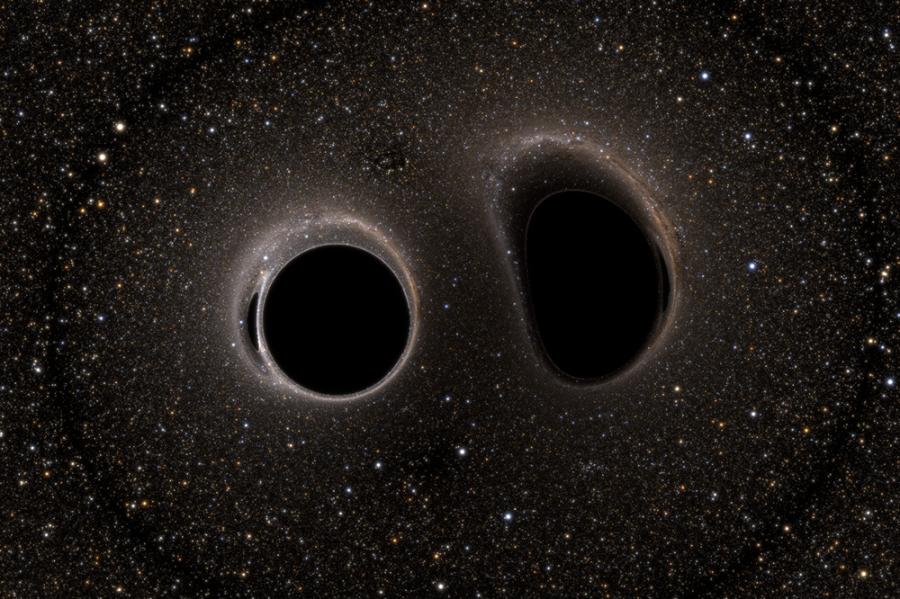
When two black holes merge, the collision rings like a bell, emitting specific tones characterized by two numbers.
Thanks to this innovation, scientists have discovered new radio bursts originating from dwarf stars and possibly from exoplanets.
The next time you visit Ithaca, check out exhibits on Chimes history, astronomical instruments, historical keyboards and so much more
In 2026, the from the Gordon and Betty Moore Foundation will begin funding 10 two-year postdoctoral appointments including three in astronomy, chemistry and physics in the College of Arts and Sciences.
Tasked with studying exoplanet systems around small stars, the refrigerator-sized satellite is the first in NASA’s Astrophysics Pioneers program – small-scale missions designed to train early-career scientists, including Trevor Foote, Ph.D. ’24, a former member of the research group led by faculty member Nikole Lewis.